
The Door to Hell: Is Turkmenistan’s Darvaza Gas Crater Still Burning?
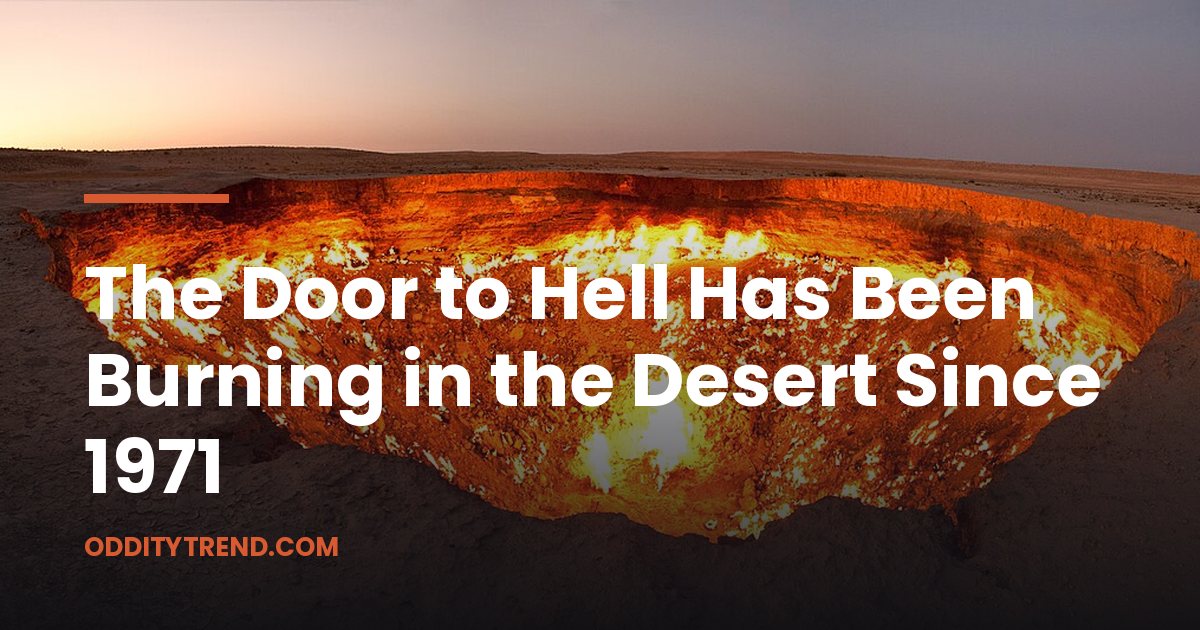
In the middle of the Karakum Desert in Turkmenistan sits a 70-metre-wide crater that has been on fire since 1971. Locals call it the Door to Hell; officially it is the “Shining of Karakum”. For more than fifty years it glowed orange around the clock and could be seen from kilometres away across the desert.
Is the Door to Hell still burning? Barely. In June 2025, Turkmenistan’s state gas company announced the fire had been reduced roughly three-fold after wells were drilled around the crater to capture the methane feeding it. Visitors now report a charred pit with a few pockets of small flames rather than the famous inferno.
Nobody planned for it to burn this long. Here is how it started, why it lasted half a century, and what is left of it now.
How a Gas Field Turned Into a Permanent Bonfire
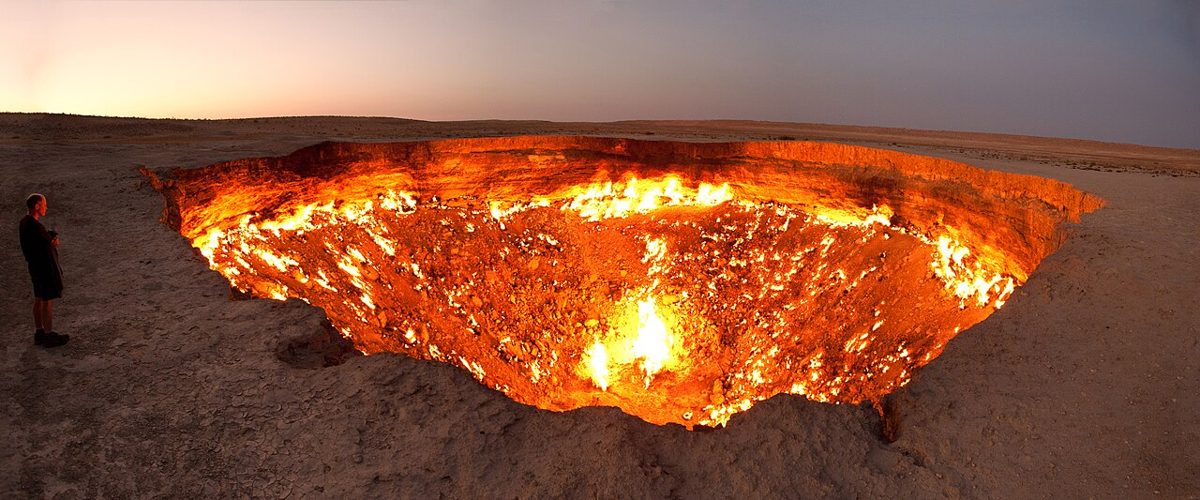
The most widely repeated account traces back to 1971, when Soviet geologists drilling for natural gas hit an underground cavern that collapsed beneath their equipment, swallowing part of the drilling rig and opening a crater filled with methane. Worried about the gas poisoning nearby villages and wildlife, the engineers reportedly decided to burn it off — a controlled measure expected to clear the pocket of gas within a few weeks.
That was over fifty years ago. The crater is still burning.
The exact dates and details have been disputed by researchers and Turkmen officials over the years — some accounts place the collapse later, in the 1960s, and the Soviet-era records that would settle it definitively are incomplete or classified. What isn’t disputed is that the field beneath the crater sits on one of the largest natural gas reserves on Earth, which is exactly why it hasn’t gone out: there’s simply an extraordinary amount of fuel still feeding it.
Is It Still Burning? The 2025 Shutdown
For decades Turkmenistan talked about closing the crater, partly over wasted gas reserves and partly over the methane it pumps into the atmosphere. Talk turned into action after former president Gurbanguly Berdimuhamedov ordered officials in 2022 to find a way to put it out.
Smothering a crater this size is not like putting out a campfire, so engineers went after the fuel instead. They drilled wells around the site to draw off and capture the gas before it reaches the fire. In June 2025 a director at state gas company Turkmengaz told a conference in Ashgabat that the blaze had shrunk about three-fold, and that the glow once visible from kilometres away had become a faint source of combustion. Independent satellite monitoring has also recorded a large drop in the crater’s heat.
The crater still leaks methane, and small fires still flicker on its floor and rim, so it has not gone out completely. But the roaring “Door to Hell” in most online photos is effectively gone.
People Actually Visit It
Despite Turkmenistan’s reputation as one of the most difficult countries in the world to get a tourist visa for, the Darvaza crater — its official name — has become a genuine, if small-scale, tourist attraction. Visitors typically arrive at dusk and camp nearby overnight. There’s no fence, no ticket booth and no official visitor centre, just a wide hole in an otherwise empty stretch of desert. Since the 2025 shutdown, expect a few small fires rather than the roaring glow in older photos; some travellers now come away disappointed, so go for the remoteness as much as the flames.
In 2013, Canadian explorer George Kourounis became the first person confirmed to have descended into the crater itself, wearing a heat-resistant suit, to collect soil samples from the crater floor — partly out of curiosity about whether anything could survive that close to the flames. Researchers later confirmed that heat-tolerant bacteria were, in fact, living in the soil at the bottom.
So: a hole that was supposed to burn out in a few weeks, in a country most people couldn’t point to on a map, has been on fire for the entirety of most people’s lifetimes, hosts microbial life at its base, and gets visited by tourists who show up specifically to sleep near an open flame the size of a football field. Genuinely one of the stranger places on the planet — and it’s not going anywhere soon.
Keep Reading
- 8 Abandoned Places Frozen in Time (And the Stories Behind Them)
- 10 Animals That Look Fake But Are Real (With Photos)
- 11 Weird Laws Around the World That Still Exist